

Serving all of South Florida and the Treasure Coast
Custom Draperies and Sheers Guide for Palm Beach County
Custom drapery can soften a room, add color and texture, improve privacy, darken a bedroom or cover a large opening that is difficult to treat with another product. Floor-to-ceiling sheers can create a light, elegant appearance while still giving a room a finished look.
The price of custom drapery varies more than almost any other window treatment. There is no honest single “price per window” because the final cost depends on the fabric, yardage, lining, fabrication, hardware, installation height and whether the drapery is stationary, manually operated or motorized.
At Palm Beach Shutters & Shades, we coordinate the fabric, hardware, seamstress fabrication, measuring and installation as one complete project. This guide explains the major choices and gives realistic examples of what custom draperies and sheers can cost.
What styles of custom drapery are available?
The header style is primarily a matter of personal preference. We show customers photographs of the different options so they can choose the appearance that works best with their home.
Ripple-fold drapery
Ripple-fold drapery creates smooth, consistent waves from one end of the treatment to the other. It provides a clean, tailored appearance and works especially well with a traverse track.
Ripple fold requires extremely accurate measuring and fabrication because there is almost no height adjustment after the drapery is completed. The finished fabric must be positioned correctly above the floor without dragging or appearing too short.
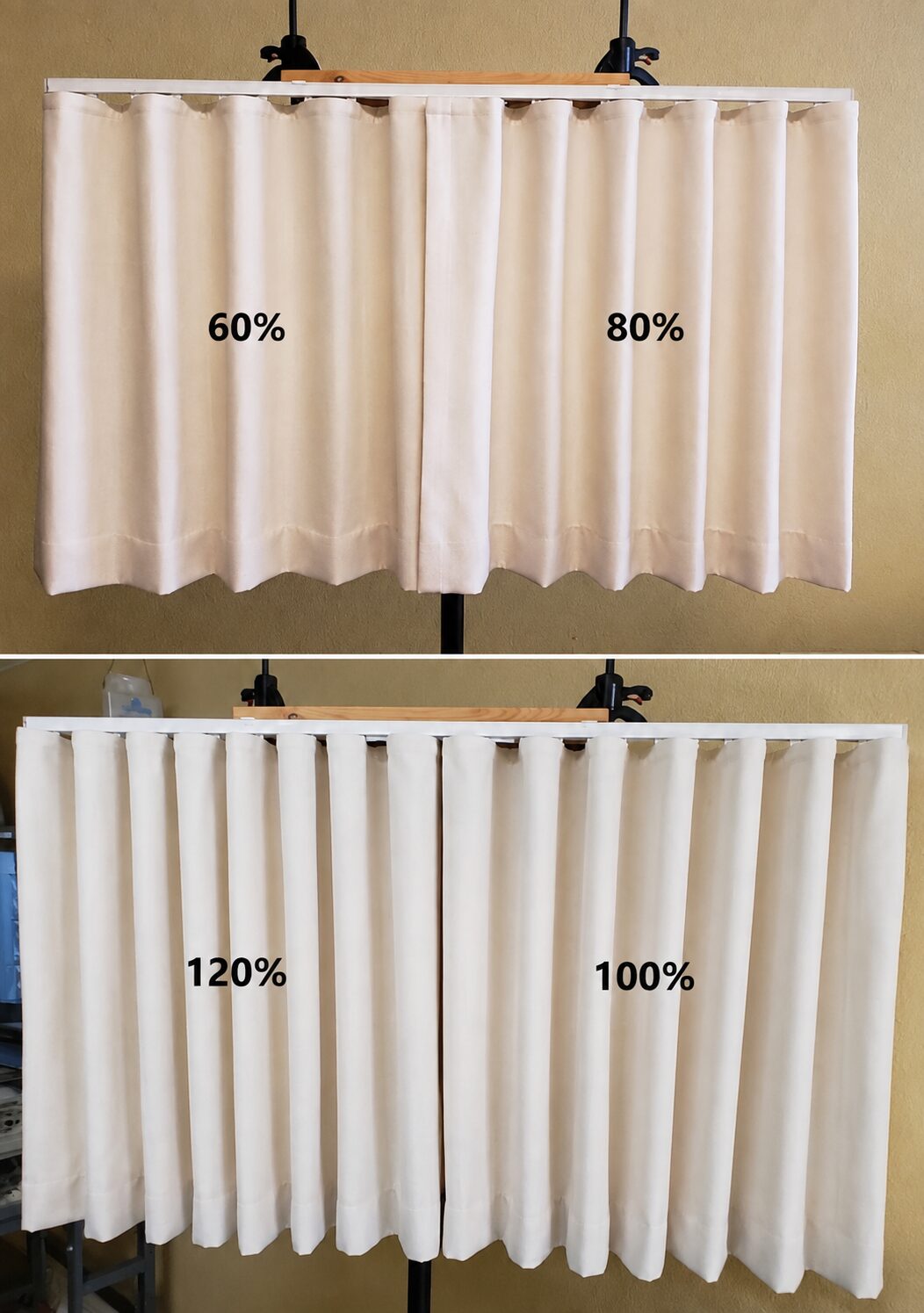
The fullness factor controls how much fabric is used and how closely spaced and substantial the waves appear. PBSS typically uses either 80% fullness for a cleaner, less-dense look or 100% fullness for a fuller, more substantial appearance.
Pinch-pleat drapery
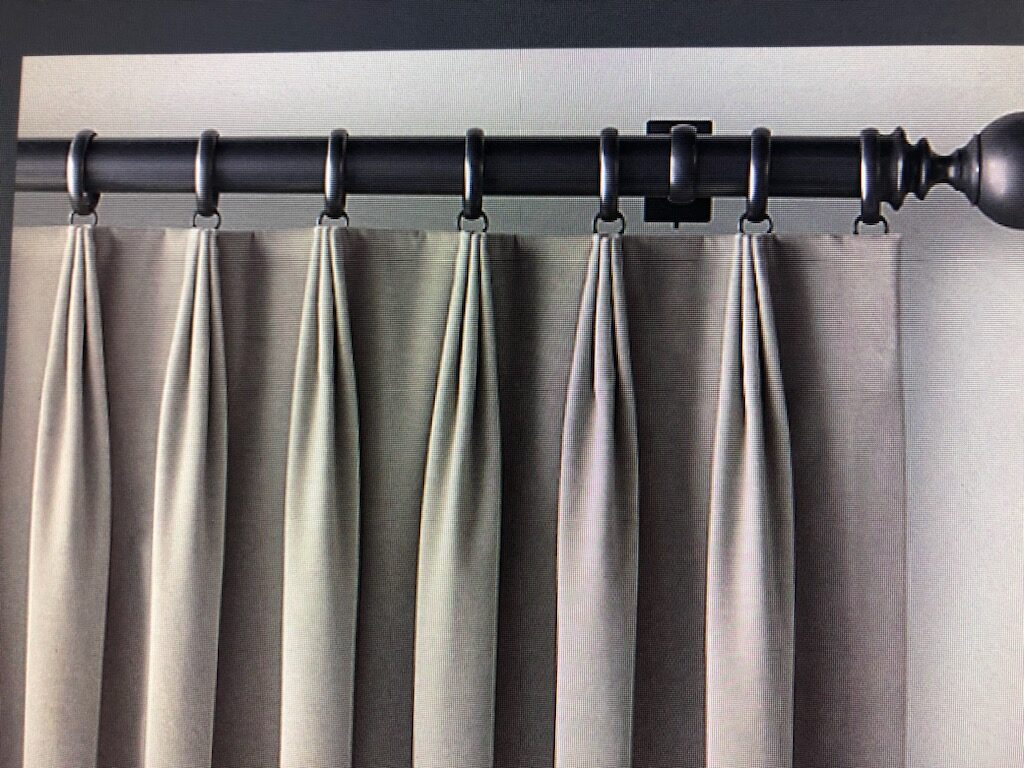
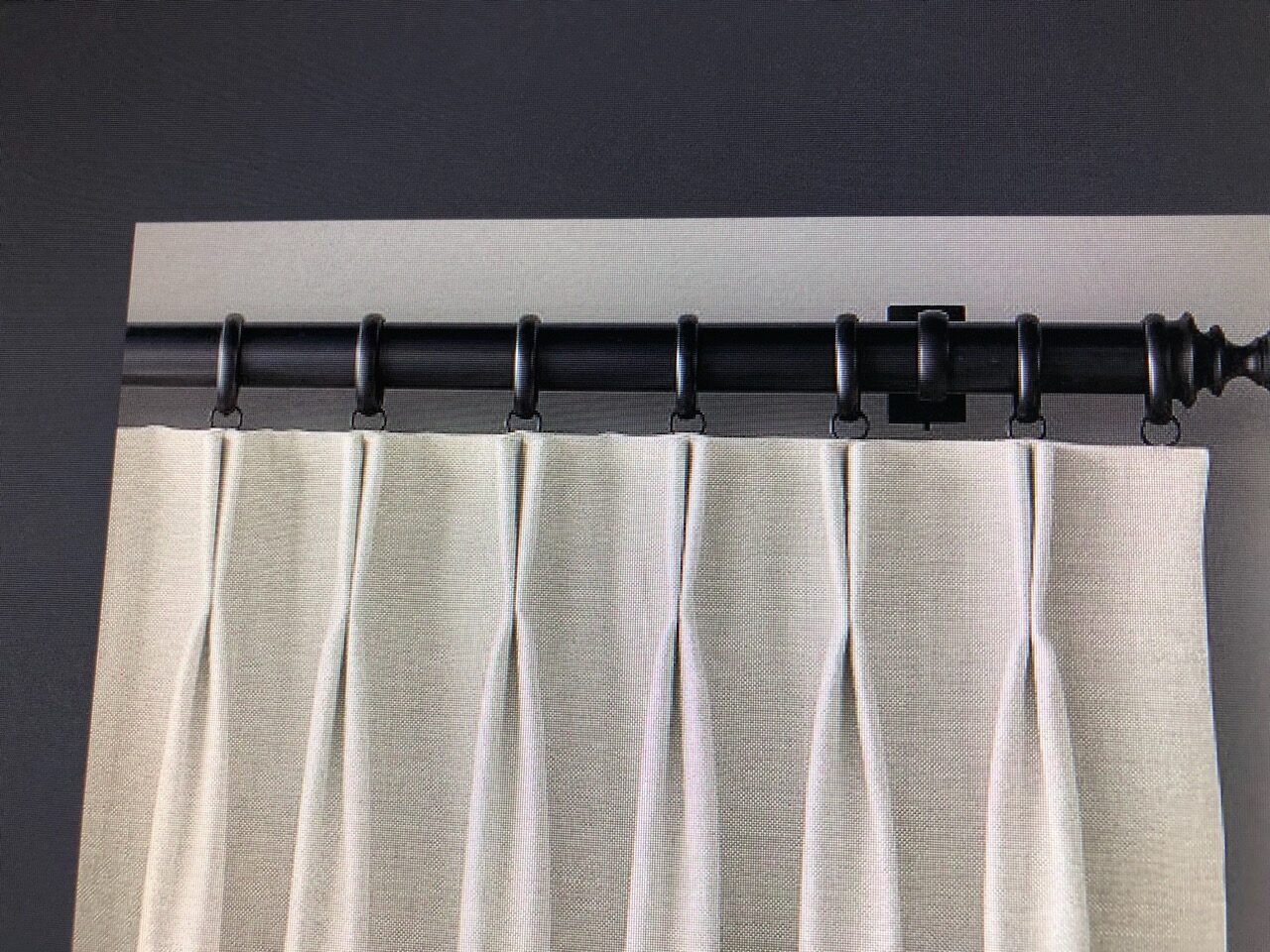
Pinch pleats provide a more traditional tailored appearance. The drapery hangs from adjustable pins, allowing limited height adjustment during installation.
If the top of the treatment will be hidden inside a soffit or behind a cornice, pinch pleats are often easier and more forgiving than ripple folds because the installer can adjust the pins slightly.
Grommet-top and rod-pocket panels
Grommet-top panels slide onto a rod through finished metal openings. Rod-pocket panels have a sewn pocket through which the rod passes. These styles may work well for simpler decorative applications, depending on the desired appearance and how often the panels need to move.
Stationary decorative panels
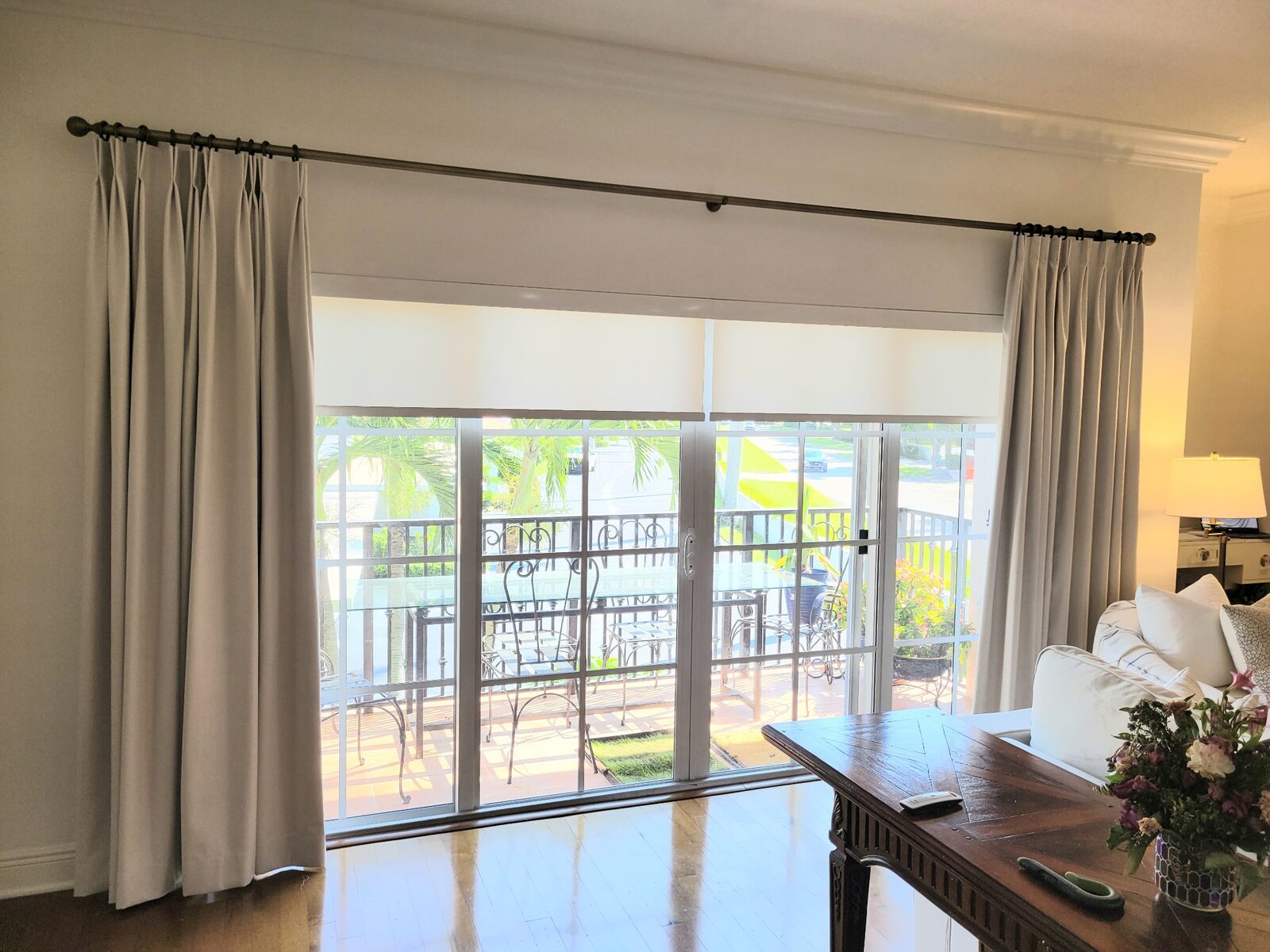
Stationary panels are designed to frame a window rather than open and close across it. They are a good choice when a customer wants fabric for softness, color or decoration but does not need the drapery to provide functional privacy or light control.
Floor-to-ceiling sheers
Sheers diffuse light and create movement and softness without making the room feel heavy. They can be used alone or layered with blackout drapery, roller shades or other window treatments.
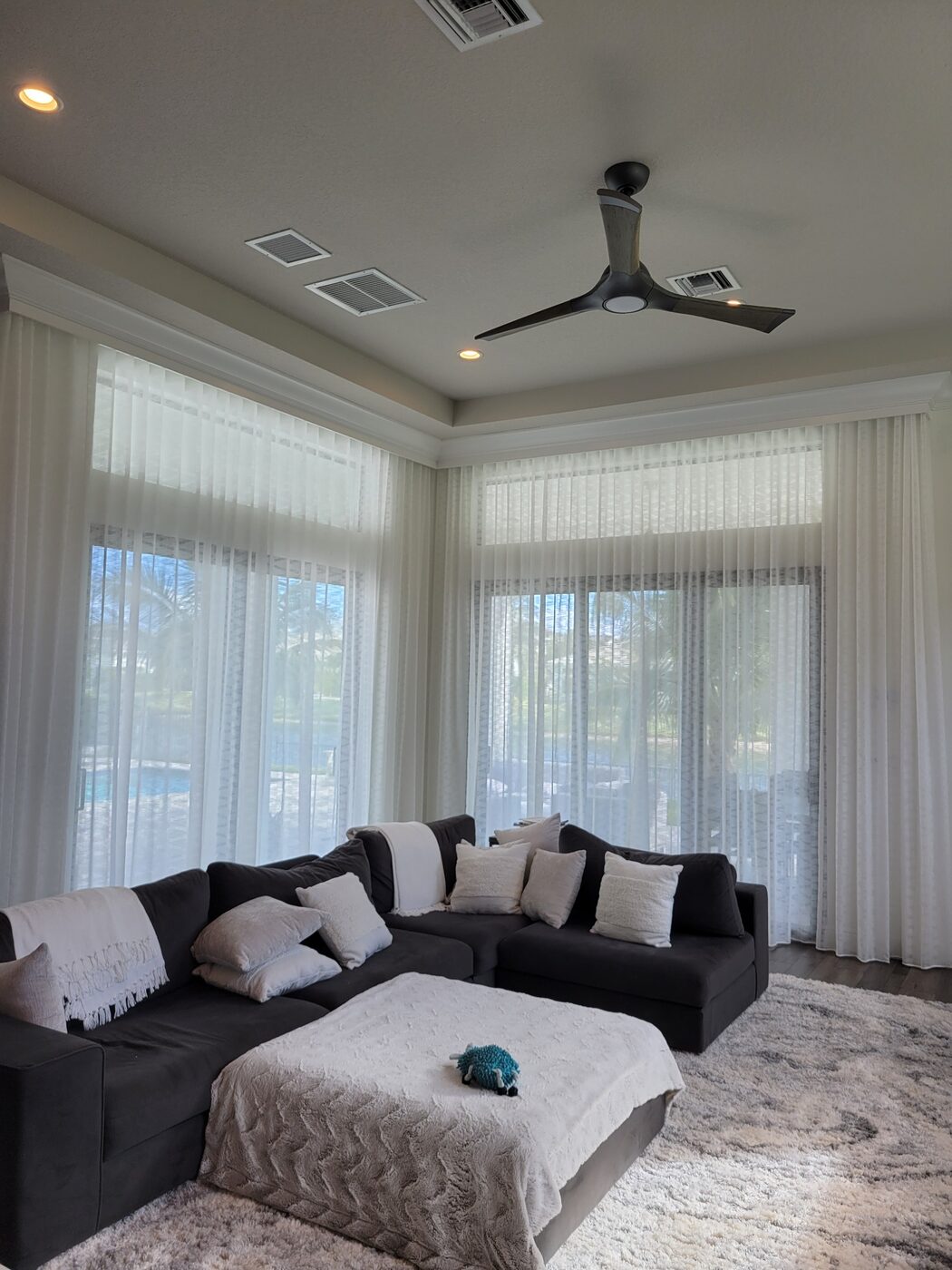
For more ideas on layering drapery with shades, see our Blinds vs. Shades Guide.
How much does custom drapery cost?
Custom drapery pricing is built from several separate components:
- Face fabric
- Privacy, blackout or interlining fabric
- Seamstress fabrication
- Rods, tracks, brackets, rings and carriers
- Measuring and installation
- Motorization, when selected
- Additional access equipment for high installations
A small change in the rod length or installation height can increase several of these components simultaneously. A wider rod requires more fabric, more fabrication labor and more hardware. A taller installation requires more fabric and may also increase seamstress and installation charges.
What does drapery fabric cost?
Many attractive polyester, linen, polyester-rayon and linen-blend fabrics from manufacturers such as Nobar, Carole and S&S Fabrics have a typical wholesale cost of approximately $30 to $40 per yard. Retail pricing is often close to double, or roughly $60 to $80 per yard.
High-end fabrics, including some designer collections such as Fortunoff, may cost approximately $100 to $200 per yard wholesale. Retail pricing for those fabrics can be substantially higher.
Most standard drapery fabrics are approximately 55 inches wide. The fabric is sold by the linear yard, and one yard equals 36 inches in length.
Why are sheers often more affordable?
Sheer fabrics often have a wholesale price of approximately $18 to $30 per yard, with retail pricing commonly close to double. They also frequently come in wide widths of approximately 110 to 125 inches.
Because the fabric is both less expensive and much wider than standard 55-inch drapery fabric, sheers generally provide more coverage per yard. This makes them one of the more affordable ways to create a custom floor-to-ceiling fabric treatment.
How is drapery yardage calculated?
For fully functional drapery—whether ripple fold, pinch pleat, rod and rings or a traverse rod—a useful starting point is approximately 2.5 times the finished rod or window width.
Example: 72-inch-wide by 130-inch-high drapery
- Multiply the width by the desired fullness:
- Divide by the standard fabric width:
- Add approximately 25 inches to the finished height for hems and fabrication waste:
- Convert the required length to yards:
- Multiply by four widths:
72 inches × 2.5 = 180 inches
180 ÷ 55 = 3.27, rounded up to four fabric widths
130 + 25 = 155 inches per width
155 ÷ 36 = 4.31 yards per width
4.31 × 4 = 17.24 yards, rounded up to approximately 18 yards
At a retail fabric price of $60 to $80 per yard, the face fabric alone would cost approximately $1,080 to $1,440 before lining, fabrication, hardware and installation.
Pattern matching, fabric repeats, pleat style and the exact measurements can increase the required yardage. Final quantities should always be confirmed before ordering.
What lining should be used?
Lining affects light control, appearance, fabric protection and cost.
Privacy or light-filtering lining
Privacy lining—also called light-filtering lining—is the most common choice. It gives the face fabric additional body, improves privacy and helps protect it from direct sunlight. Wholesale privacy-lining cost is often approximately $6 per yard.
We usually recommend lining drapery fabric, especially on windows receiving strong Florida sunlight.
Blackout lining
Blackout lining is commonly selected for bedrooms or for customers who want a heavier, more substantial appearance. Wholesale blackout-lining cost is typically approximately $10 to $11 per yard.
Interlining
Interlining is usually a flannel-like layer placed between the face fabric and the lining. It adds body and creates a fuller, heavier appearance. Its wholesale cost is often similar to blackout lining.
Unlined drapery
An unlined polyester or linen-blend fabric can create a light, airy treatment that falls between a sheer and a traditional lined drapery. It provides more substance than a sheer while allowing more light and maintaining a less formal appearance.
What does custom fabrication cost?
Seamstresses commonly charge by the number of standard fabric widths rather than by the number of finished panels.
Representative wholesale fabrication costs are approximately:
- $55 to $65 per standard width when the finished height is under approximately 130 inches
- About $85 per standard width when the finished height exceeds approximately 130 inches
Wide-width fabric may be charged as the equivalent of two standard widths. Additional construction details, pattern matching, linings, complex headers and unusually tall treatments can also affect fabrication costs.
What does drapery hardware cost?
Drapery hardware ranges from a straightforward ceiling-mounted track to highly decorative custom-made rods. The hardware can be one of the largest costs in a project.
Rods and rings
Quality rod-and-ring hardware is often the most economical decorative choice, although the rings themselves can represent a significant portion of the cost.
For one current project, a solid rod and rings spanning approximately five feet for a roughly three-foot window cost close to $400 wholesale, or approximately $800 retail.
We strongly discourage inexpensive telescoping rods for heavy or functional drapery. Telescoping rods can bend, often look less finished and create a raised connection point that makes it difficult for rings or fabric to move smoothly. A quality one-piece rod is usually worth the additional expense.
Manual traverse rods
A traverse rod allows the drapery to open and close using carriers inside the track. Quality manual traverse rods are not necessarily much more expensive than good rod-and-ring hardware.
Pinch-pleat and ripple-fold traverse systems are often similarly priced. The difference is primarily the carrier system and finished appearance.
Decorative versus concealed tracks
A basic ceiling-mounted track in white, black or silver is usually intended to disappear visually. Decorative rods and decorative traverse systems are generally wall-mounted, where their finish and shape remain visible.
Standard matte black is widely available. Brushed brass, satin brass, antique brass, bronze and white finishes may have fewer manufacturer options and can increase the cost or lead time. Aria and Forest are examples of manufacturers offering quality drapery hardware.
How expensive can custom hardware become?
In one current four-room project, the customer selected custom dual rods for layered sheers and blackout drapery. The wholesale cost of the non-motorized hardware alone is nearly $17,000.
That is an unusually premium example, but it demonstrates why a drapery quote cannot be estimated accurately without knowing the desired hardware and finish.
What does motorized drapery cost?
Traditional motorized drapery uses a powered traverse system. A typical motorization upgrade is approximately $900 to $950, but that amount can increase depending on the rod length, drapery weight, motor strength and whether the customer selects a basic concealed track or decorative hardware.
Motorized traditional drapery is normally powered by plugging directly into a nearby electrical outlet. Heavy blackout fabric and very large openings may require stronger motors and hardware.
For motor choices, power sources and smart-home options, visit our Motorized Blinds and Drapes Guide.
What does installation cost?
Representative installation pricing is approximately:
- Around $15 per linear foot for a typical installation
- Around $30 per linear foot for very tall installations, especially when scaffolding is required
High installations require more time, specialized equipment and additional safety precautions. Scaffolding may be necessary to install the hardware and then hang and dress the drapery properly.
Heavy drapery should not rely only on common drywall anchors. Whenever possible, brackets should be fastened into wood framing or secured deeply into concrete with the correct fasteners, such as Tapcons. Proper mounting helps prevent the brackets and rods from pulling away from the wall after repeated operation.
Why measuring and stack-back planning matter
Floors and ceilings are not always level, especially across a wide opening. Measurements may need to be taken at several points so the seamstress can accommodate height differences during fabrication.
Most customers want their drapery to clear as much glass as possible when open. This requires enough wall space on each side of the opening for the fabric to stack back.
Simply extending the rod farther beyond the window does not always solve the problem. A longer rod also requires more fabric, and the additional fabric creates a larger stack. The rod length, fabric fullness and available wall space have to be balanced together.
Real PBSS project examples
Tall floor-to-ceiling sheers: approximately $4,000
One recent project included approximately 180-inch-tall ceilings, six floor-to-ceiling sheer panels across the family room and kitchen, plus two additional floor-to-ceiling sheer panels in the master bedroom.
The total customer price was approximately $4,000 for the completed treatments. This is a competitive example of how wide-width sheer fabric can create a dramatic result at a lower cost than fully lined standard-width drapery.
Three motorized drapery openings: approximately $20,000
Another project included two dining-room rods and one family-room rod, installed approximately 135 inches high. The customer selected motorized drapery with privacy/light-filtering lining rather than blackout lining.
The approximately $20,000 all-in price included fabric, seamstress fabrication, motorized hardware and installation.
Large sliding-door opening: approximately $7,000 to $8,000
For a large slider measuring approximately 9 to 10 feet high and 12 to 14 feet wide, a complete functional drapery treatment on a traverse system can reasonably cost approximately $7,000 to $8,000, depending on the fabric, lining and hardware.
These examples are not quotes for another home. They demonstrate how the size and specifications influence the total project cost.
Can customers purchase ready-made panels online?
Ready-made panels can be a reasonable option for a customer working within a tight budget. We recommend buying panels slightly longer than necessary so a local seamstress can adjust the finished height.
If several panels are needed on each side, a seamstress can sometimes join and hem the panels to create a more unified appearance. Customers should still calculate enough total panel width to provide approximately 2.5 times fullness for functional drapery.
The area where customers should avoid cutting costs is the supporting hardware. Heavy fabric on a low-quality telescoping rod can bend, bind or pull the brackets from the wall.
How should custom drapery be cleaned?
Routine care should focus on gentle dusting or carefully shaking out the fabric.
We generally do not recommend washing custom drapery at home. Professional dry cleaning also carries some risk, especially when the treatment includes mixed fibers, embroidery, trims, lining or interlining. Different materials can shrink at different rates, leaving the finished treatment uneven or distorted.
If deeper cleaning becomes necessary, consult a cleaner experienced with custom window treatments and provide all available fabric-content information.
How long does custom drapery take?
A typical custom drapery or sheer project takes approximately six to eight weeks from final approval to installation. Timing can vary based on fabric availability, hardware production and the seamstress’s current fabrication schedule.
Larger fabric orders may qualify for discounted full-roll pricing. An experienced provider can help identify which manufacturers offer roll pricing and coordinate the fabric delivery, workroom schedule, hardware and installation so the pieces arrive in the correct order.
Why professional coordination and installation matter
Custom drapery has many interdependent parts. You can also review our draperies, sheers and panels product page for an overview of available treatment types. The provider must understand:
- Fabric manufacturers and availability
- Cut-yardage versus full-roll pricing
- Yardage, fullness and pattern repeats
- Appropriate lining and interlining
- Header and carrier compatibility
- Hardware finishes, brackets and weight capacity
- Workroom capabilities and production schedules
- Uneven floors and ceilings
- Correct wall or ceiling attachment
- Final hanging, adjustment and dressing
Excellent fabric and beautiful hardware will still look poor if the measurements, fabrication or installation are wrong. Palm Beach Shutters & Shades manages the process from product selection and measuring through fabrication and final installation.
Frequently asked questions
Are sheers less expensive than traditional drapery?
Usually. Sheer fabrics generally cost less per yard and are often more than twice as wide as standard drapery fabric. That provides more coverage per yard and reduces the number of seams and standard widths required.
Should drapery always be lined?
We usually recommend lining to protect the face fabric from sunlight and improve the finished appearance. Unlined linen or polyester blends can be appropriate when the customer specifically wants a lighter, airier treatment.
Is blackout lining necessary?
Blackout lining is most common in bedrooms or when the customer wants maximum room darkening and a heavier appearance. Privacy or light-filtering lining is sufficient for many living areas.
Which is better: ripple fold or pinch pleat?
Neither is universally better. The choice is mainly visual. Pinch pleats offer limited height adjustment during installation, while ripple folds require more exact measuring and fabrication.
Are ceiling-mounted tracks less expensive?
A basic concealed ceiling track is often less expensive than decorative hardware. Custom finishes, decorative traverse systems, dual tracks and motorization can substantially increase the price.
Can existing drywall anchors support heavy drapery?
They often should not be relied upon. Heavy or frequently operated drapery should be attached to suitable framing or concrete using hardware appropriate for the wall construction.
How much does a large custom drapery project cost?
A large slider can cost approximately $7,000 to $8,000, while multi-room or motorized projects can reach $20,000 or more. Fabric, lining, hardware, dimensions and installation conditions determine the actual price.
Schedule a custom drapery consultation
Palm Beach Shutters & Shades provides in-home consultations throughout Palm Beach County. We bring fabric and product options to the home, evaluate the windows and surrounding wall space, measure for the correct fullness and stack-back, coordinate custom fabrication and professionally install the completed treatments.
Whether you are considering decorative panels, floor-to-ceiling sheers, functional drapery, layered treatments or motorized traverse rods, we can help develop the right solution for the room and budget.
Request a free in-home consultation → or call 561-285-4700.